

Key Takeaways
- Myopia causes blurry distance vision, while hyperopia affects close-up vision.
- Both conditions happen because of how your eyes are shaped and where light focuses on the retina.
- Symptoms like headaches and eye strain can appear with either condition.
- A comprehensive eye exam can identify which one you have.
- Corrective lenses, myopia control, and refractive surgery are all treatment options worth discussing with an eye doctor.
What Myopia and Hyperopia Actually Mean
You sit down to read, and everything looks fine, but when you glance up at a street sign, it’s a blur. Or maybe it’s the opposite, and you struggle to read a menu or the screen of your phone, while distant objects remain clear. Both experiences point to a refractive error, but they’re not the same condition.
Myopia is when a person struggles to see distant objects, while hyperopia is when a person struggles to see close-up objects. Both conditions are refractive errors, meaning that they’re caused by how your eyes focus light. A comprehensive eye exam with our team at Orangeville Optometric Centre can help you figure out which (if any) of these conditions you may have.
Eye Shape and What’s Going On Inside
Both conditions come down to the shape of your eye and how light travels through it.
Myopia
With myopia, your eyeball is longer than average, or your cornea curves too steeply. Either way, the result is that your eye focuses light so that it falls in front of your retina (a tissue at the back of your eye that sends visual information to your brain) rather than directly onto it. This causes blurry vision at a distance, while near vision remains clear.
Hyperopia
Hyperopia works in the opposite direction. The eyeball is shorter than average, or the cornea is flatter, so light focuses behind the retina. This causes blurry near vision, while distance vision remains clear.
Presbyopia
Presbyopia is another common condition that affects near vision, which is why it’s often confused with hyperopia. However, unlike hyperopia, presbyopia isn’t caused by the shape of the eyeball or cornea.
It occurs when the eye’s natural lens becomes less flexible with age, making it harder to focus on nearby objects. This causes blurry near vision during activities like reading or using a smartphone, while distance vision may remain clear. The underlying cause is different from hyperopia, but because the symptoms overlap, the two conditions are easy to mix up without a proper exam.

Signs and Symptoms
Both conditions can produce similar symptoms, like headaches and eye fatigue, which makes it easy to mix them up.
Myopia
- Blurry vision when looking at distant objects like road signs or whiteboards.
- Squinting to bring things into focus.
- Headaches or eye strain after spending time looking at objects that are far away.
Hyperopia
- Blurry or strained vision during reading, writing, or other close tasks.
- Headaches after near work, like studying or working at a computer.
- Difficulty concentrating when tasks involve a lot of detail.
Neck and shoulder tension can be caused by both conditions, often because you’re unconsciously adjusting your posture to see better.
How to Know Which One You Have
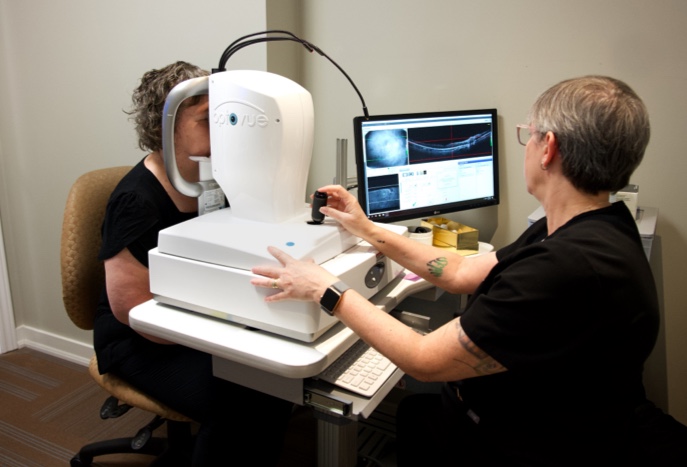
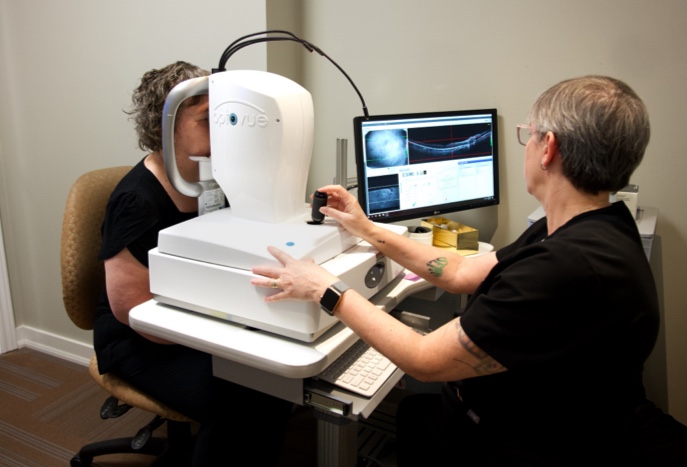
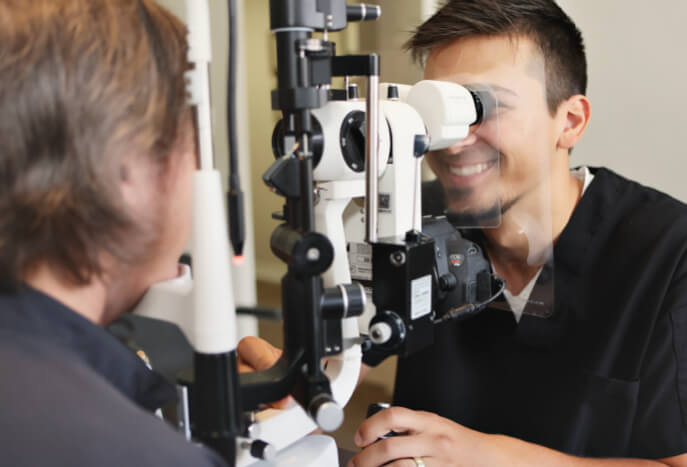
A comprehensive eye exam is the best way to get an accurate diagnosis. As your eye doctor in Orangeville, we’ll check your prescription, examine the health of your eyes, and look at how well your eyes are working together. This helps us identify not just whether you have myopia or hyperopia, but how significant it is and whether there’s anything else going on too.
Treatment Options for Both Conditions
Both myopia and hyperopia are manageable. There are several approaches available, depending on your prescription, lifestyle, and goals.
Glasses and Contact Lenses
Corrective lenses are the most common starting point. There are several kinds of contact lens types available, including daily, bi-weekly, and monthly wear options. The right choice depends on your comfort, routine, and how your eyes respond.
Myopia Control and Refractive Surgery
For children and teens with myopia, myopia control options can help slow the progression of the condition. Common management choices include myopia control glasses, specialty contact lenses, and atropine drops.
For adults looking for a longer-term option, refractive surgery like LASIK or PRK reshapes the cornea to improve how light focuses. Not everyone is a candidate, however, so a thorough evaluation comes first.
Talk to Us at Orangeville Optometric Centre
Whether you’re noticing blurry road signs or struggling to focus on a page, your eyes are telling you something. Our team at Orangeville Optometric Centre can help you figure out what’s going on. Reach out now to book your comprehensive eye exam.