

Your eyes rely on a thin layer of tears to keep the front surface smooth. Every blink spreads that tear film across your eye, and light passes through it on the way in.
When that layer thins or breaks apart, light scatters and the image softens. Yes, dry eye can cause blurry vision, and it tends to come and go rather than stay constant. Your sight might sharpen the moment you blink, then fade again a minute later.
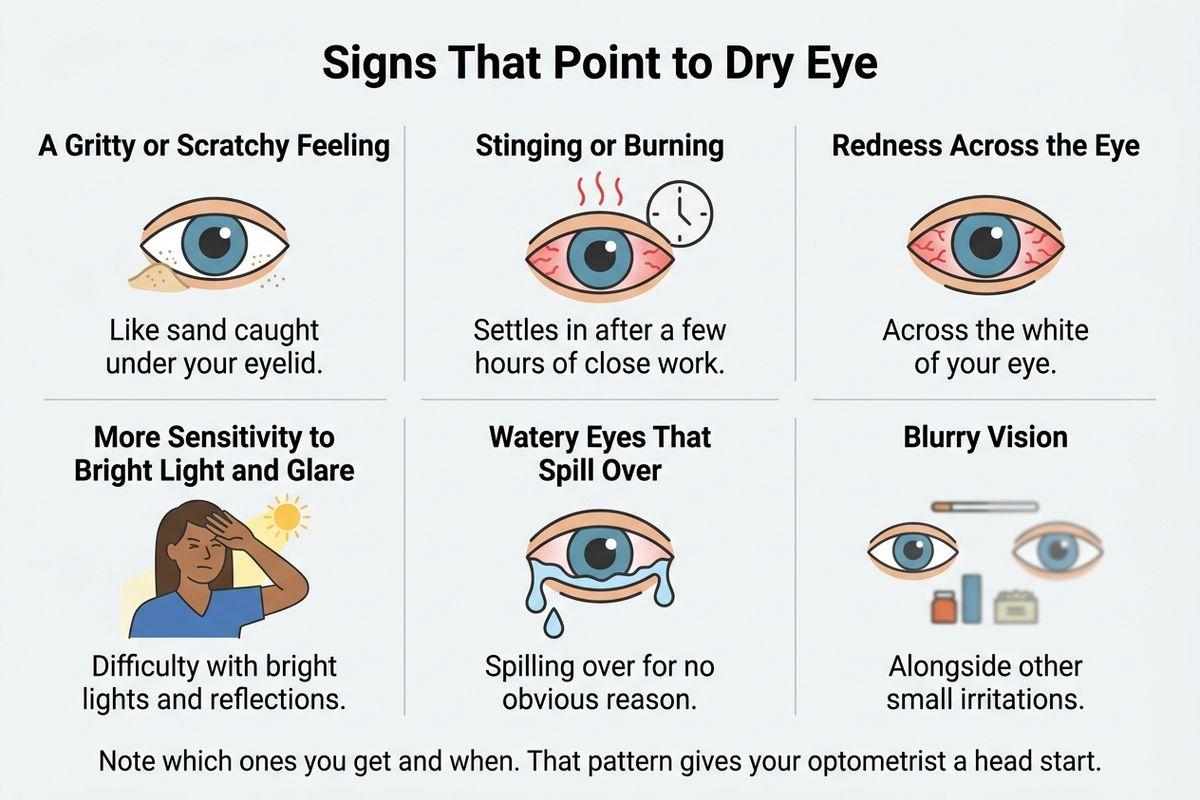
Signs That Point to Dry Eye
Dry eye rarely announces itself with a single symptom. Most people notice a handful of small irritations that build through the day and peak by late afternoon.
Here’s what often shows up alongside blurry vision:
- A gritty or scratchy feeling, like sand caught under your eyelid
- Stinging or burning that settles in after a few hours of close work
- Redness across the white of your eye
- More sensitivity to bright light and glare
- Watery eyes that spill over for no obvious reason
How to Tell If Dry Eye Is Behind Your Blurry Vision
Try a quick check the next time your vision goes blurry. Blink a few times firmly, then look at something detailed.
If the detail sharpens right away, dryness is a likely reason, since blinking lays down a fresh layer of tears.
Timing tells you something too. Blurriness that builds after a long stretch at a computer usually traces back to the tear film instead of your prescription. Vision that stays soft no matter how much you blink deserves a closer look.
Why Watery Eyes Can Still Mean Dry Eye
This part surprises people. When the surface gets irritated, your eyes respond by producing a flood of reflex tears to rinse away whatever’s bothering them.
Those tears are mostly water, so they drain off or evaporate quickly without rebuilding the oily layer that holds everything in place. The surface dries out again and the cycle repeats.
Screen Time, Blinking, and Dry Eye
Blinking slows down whenever you concentrate. Your blink rate can drop from roughly 17 times a minute to about 4 during focused near work, which leaves the tear film thin and patchy. Those dry patches scatter light, so your screen can look foggy even when your prescription is accurate.
Build breaks into your day with the 20-20-20 rule: every 20 minutes, look at something about 20 feet away for 20 seconds, and blink a few times while you’re at it.
Position your monitor slightly below eye level too. Looking downward narrows the opening between your lids, which may slow evaporation.
Contact Lenses and Dryness
Lenses sit right on the tear film and draw on that moisture to stay comfortable. By mid-afternoon, there can be less left to work with, and your vision may turn hazy along with it.
Material makes a difference here. Soft and rigid lenses interact with the surface of your eye in different ways, and a lens that suited you 2 years ago might not suit you now.
Bring your lenses to your next appointment and mention when the discomfort starts. Your optometrist can adjust the fit, the material, or how long you wear them each day.
What Raises Your Risk of Dry Eye
Some people run drier than others, and knowing what’s working against you makes the pattern easier to spot. A few things can make dryness more likely:
- Aging, since tear production tends to slow after 50
- Hormonal changes, including pregnancy and menopause
- Certain medications, such as antihistamines, antidepressants, and blood pressure pills
- Dry indoor air from winter heating, air conditioning, or a fan pointed at your face
- Health conditions like rheumatoid arthritis or Sjögren’s syndrome
How to Relieve Dry Eye
Relief often starts with small adjustments at home. Try a few of these and see what helps:
- Artificial tears, which add moisture and can smooth the surface for clearer sight
- A warm compress over closed lids, which may loosen the oil glands along your lash line
- A humidifier in the rooms where you spend the most time
- Omega-3 in your diet, which may support the oily layer of your tears
Give any of these a couple of weeks before judging them. Dryness that keeps coming back usually has something driving it, and prescription drops or in-office treatments such as IPL or radiofrequency may be worth discussing.
When to See an Optometrist About Dry Eye
Home care covers a lot of mild dryness on its own. Book an exam if blurriness sticks around after a couple of weeks of consistent effort, or if your eyes ache and look inflamed.
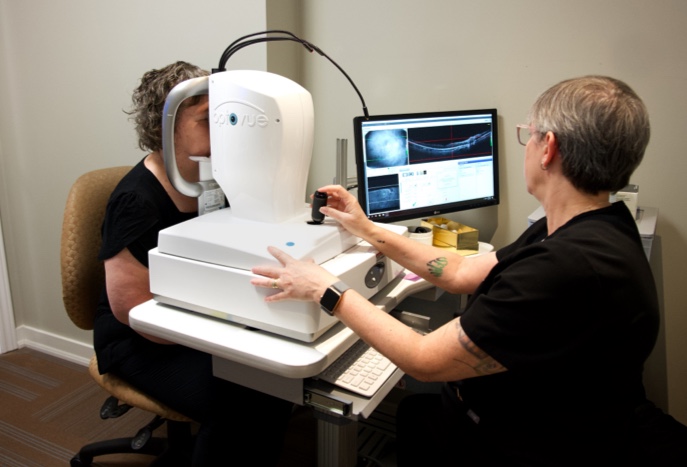
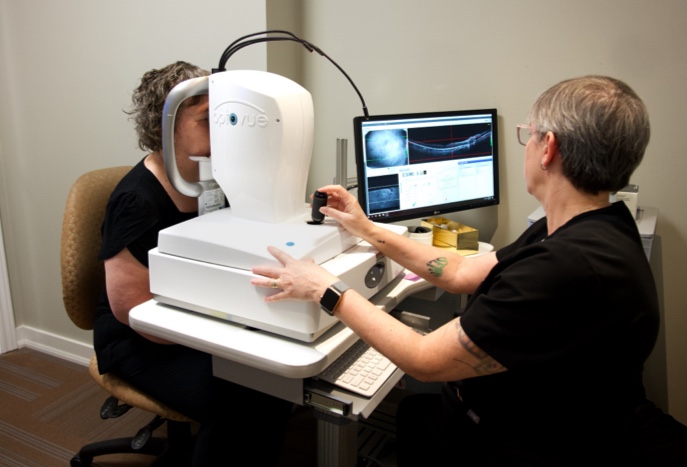
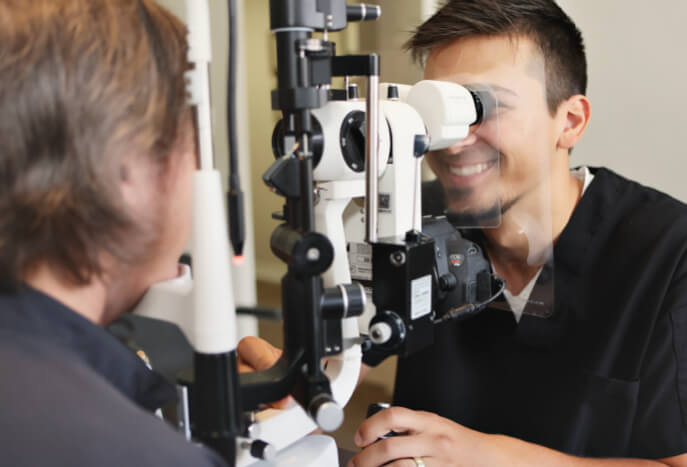
During a comprehensive exam, we can measure how quickly your tears break up and examine the oil glands along your lids. We’ll also confirm whether your prescription still fits and check how your eyes work together, so we treat the cause rather than the symptom.
Get Ahead of Blurry Vision From Dry Eye
Vision that clears the instant you blink is worth paying attention to. Book a comprehensive eye exam with Orangeville Optometric Centre and we’ll look at your tear film alongside your daily habits.
Request your appointment whenever you’re ready, and let’s find out what’s behind it.