
Key Takeaways
- Myopia makes distance vision blurry while close objects stay clear.
- Myopia control glasses correct sight and can slow how fast myopia grows.
- Eye drops, Abiliti 1-Day and MiSight contacts, and orthokeratology offer other options.
- Outdoor time and screen breaks support your child’s eyes.
The Right Glasses Slow Myopia Down
Does your child squint at street signs during the drive home, then read a comic book at home with no trouble? Our team at Orangeville Optometric Centre sees this pattern often, and it usually points to myopia. Many children wear myopia control glasses to help manage the condition, and many parents wonder how these glasses work.
Myopia control glasses work by correcting blurry distance vision in the centre of the lens, while using the edges of the lens to send a signal that slows the growth of the eyes.
What Myopia Means for Your Child’s Vision
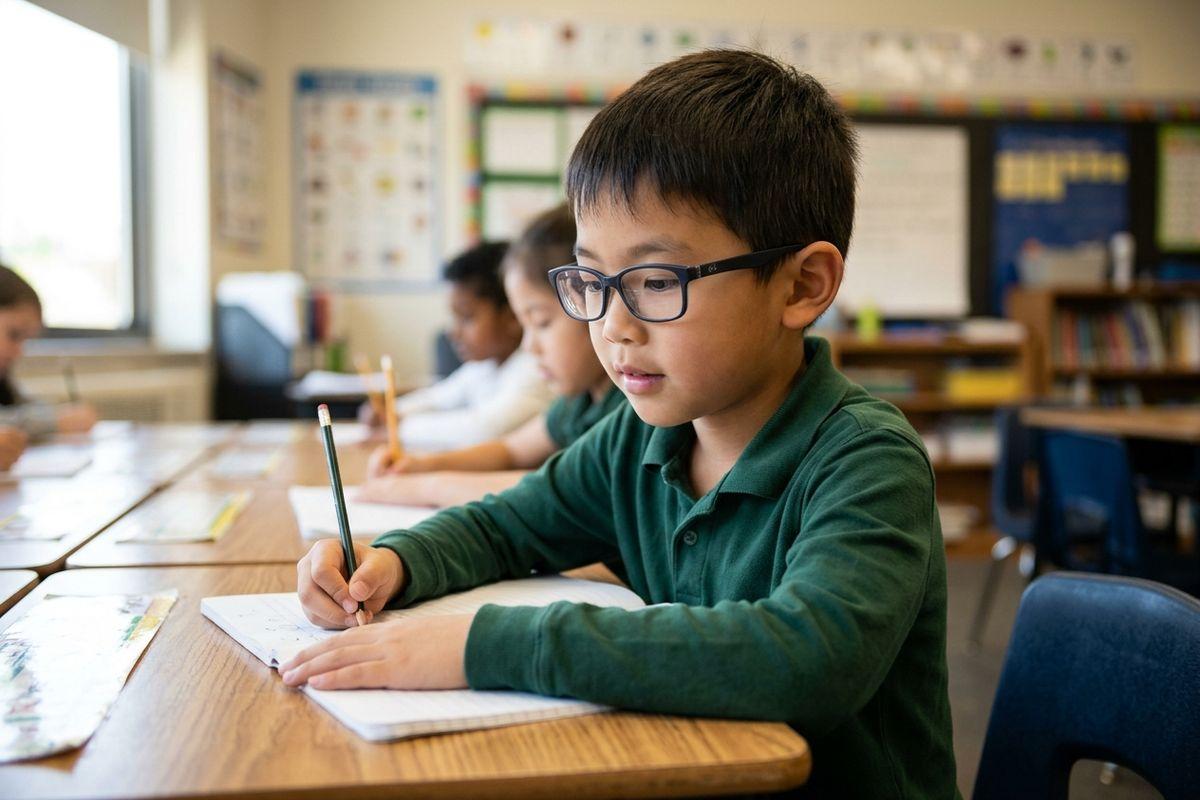
If your child squints to see the front of the classroom, but can read a book with no trouble, this points to a condition called myopia. Myopia, or nearsightedness, happens when the eye grows too long from front-to-back. A longer eye causes light to focus in front of the retina rather than on it, resulting in blurry distance vision.
Signs to Watch For
Children rarely say their vision is blurry. They just adapt. Watch for these habits instead.
- Squinting, headaches, or complaints of tired eyes
- Sitting close to the television or the classroom board
- Holding books or devices near the face
Why Myopia Tends to Get Worse
Myopia usually shows up during childhood, and it tends to progress as your child grows. This often means that their prescription changes every year. For most kids, myopia progression slows down by the late teens or early twenties, once the eyes stop growing.
Prolonged exposure to screens and spending too little time outdoors can both increase a child’s risk of myopia. Conversely, regular outdoor time and limited screen time contribute to protecting children’s vision.
Long-Term Eye Health Risks
High (severe) myopia carries additional risks later in life. The longer myopic eye puts pressure on the structures inside, which raises a person’s risk of issues like retinal detachment, glaucoma, and cataracts. In some cases, a condition called myopic maculopathy can affect the central retina.
Slowing myopia early helps lower these kinds of risks down the road.
How Myopia Control Glasses Work
Myopia control glasses do two jobs at once. The central zone of each lens corrects distance vision, much like normal glasses. The outside portion of each lens, however, is designed to focus light in a way that signals your eye to slow its front-to-back growth. Myopia control glasses like Stellest or MiYOSMART have been shown in multiple studies to significantly slow myopia progression.
Other Myopia Control Options
Glasses are just one option for myopia control. Depending on your child’s age, prescription, and daily routine, we may suggest another approach or a mix of methods.
- Low-dose atropine eye drops used at night
- Abiliti 1-Day and MiSight daily contact lenses worn during the day
- Orthokeratology, firm lenses that reshape the cornea overnight
Start with an Eye Exam
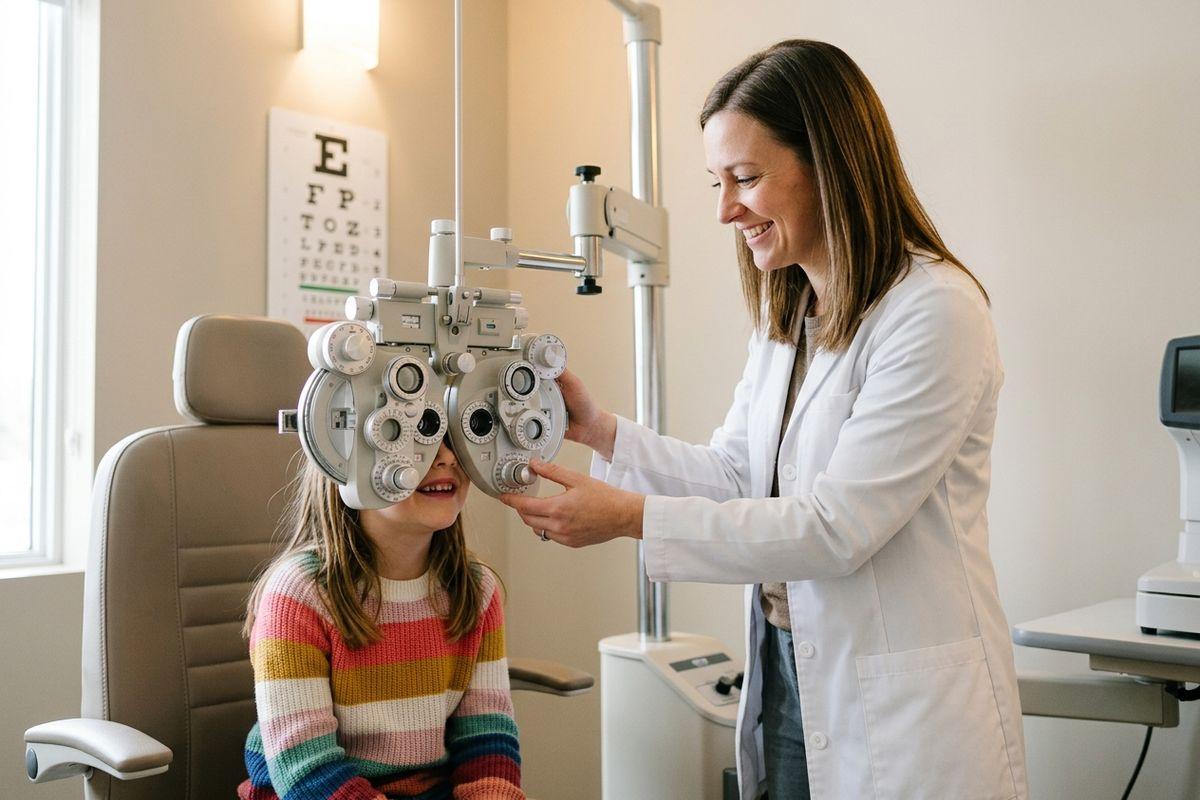
Every child’s eyes are different, so a plan that fits one may not fit another. As your eye doctor in Orangeville, we can measure how far the myopia has progressed and build a treatment plan around your child’s needs. Early action helps support clear, comfortable vision over the years ahead.
Ready to take the next step? Book a comprehensive eye exam with Orangeville Optometric Centre and let an optometrist in Orangeville help you find the right plan for your child.