

Key Takeaways
- Myopia happens when the eye grows too long, and that physical change cannot be undone.
- Eye exercises, supplements, and similar remedies do not change the length of the eyeball.
- Myopia control options, including specialty lenses and low-dose atropine drops, can help slow progression.
- Outdoor time and screen habits support healthier eye development in children.
- Annual eye exams help track changes and keep your child’s management plan on track.
What Myopia Actually Does to Your Eyes
Myopia (also called nearsightedness) is a condition where distant objects look blurry, while close-up objects can still be seen clearly. Myopia occurs when the eyeball grows too long, causing light to focus in front of the retina (a tissue at the back of your eye), rather than directly on it.
Myopia often starts in childhood and tends to progress through the teenage years into early adulthood. However, myopia cannot be reversed. It can only be managed via myopia control.
If you suspect that your child may have a vision problem like myopia, our team at Orangeville Optometric Centre is here to help. We can check their vision and recommend a management strategy.
The Truth About Myopia Reversal
Myopia can’t be reversed. Once the eyeball grows longer, it can’t shrink or return to its previous shape. This physical change to the eye’s structure is permanent, and no treatment currently changes that.
Glasses and contact lenses correct how a person sees by bending light before it enters the eye, but they don’t change the eye’s actual shape. Laser surgery like LASIK reshapes the cornea to improve vision, but again, the overall length of the eye remains the same—only the curvature of the cornea changes.
Myths Worth Dropping
A few popular myths about myopia often circulate online, and they’re worth addressing directly. Eye exercises do not shorten the eyeball. No vitamin, supplement, or herbal remedy changes the eye’s length either. Some people believe that pressing on the eyes can help, but this can actually harm your eyes.
If you’ve come across any of these claims, it’s reasonable to be curious, but none of them hold up under scrutiny.
Myopia Control Options Worth Knowing
While reversal of myopia isn’t possible, slowing progression of the condition is. There are several evidence-supported options that an optometrist in Orangeville may recommend depending on your child’s age, lifestyle, and prescription.
Specialty Lenses
Myopia control glasses and contact lenses are designed differently from standard corrective lenses. The centre of these lenses corrects a child’s vision, while the edges of the lenses are designed to reduce the signals that tell the eyes to keep growing.
Orthokeratology, or ortho-k, takes a different approach entirely. These are rigid contact lenses worn overnight that gently reshape the cornea while your child sleeps, allowing for clear vision during the day without any lenses at all. Ortho-k has also been shown to slow the development of myopia.
Atropine Eye Drops
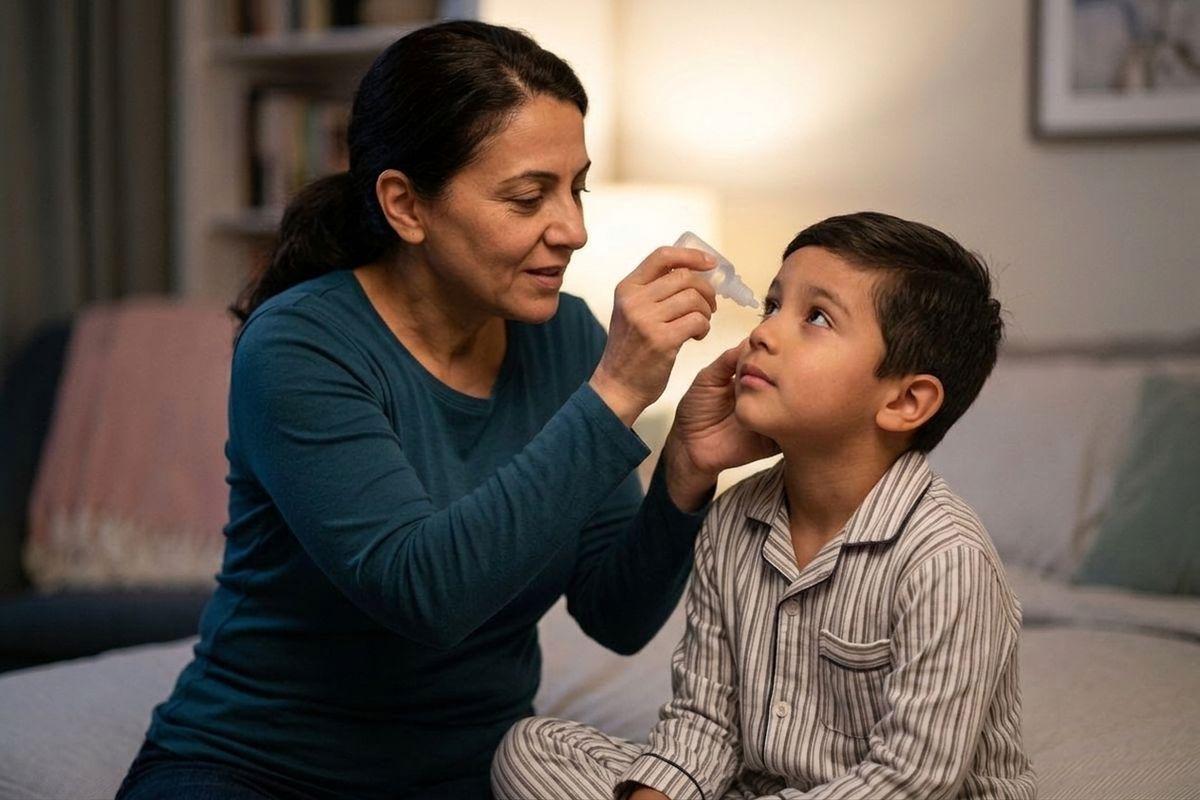
Low-dose atropine drops are applied to the eye each night and have shown consistent results in reducing how quickly myopia progresses. They’re typically used alongside other myopia control methods. The dose of atropine used for myopia control is very low, so side effects tend to be minimal. This breakdown of atropine drops for myopia control in children offers a thorough look at how they work and what to expect.
Habits That Support Healthy Eyes
Alongside clinical options, daily habits play a big role in supporting eye health, particularly for children.
Aim for 90 to 120 minutes of outdoor time each day. Research on outdoor time and myopia risk points to natural light exposure and time spent outdoors as a factor that may support healthier eye development in children.
During screen time, have your child follow the 20-20-20 rule: every 20 minutes, look at something 20 feet away for 20 seconds. Holding screens 30 to 40 centimetres from the face also reduces strain. These habits won’t replace clinical care, but they can work alongside it to support your child’s eye health over time.
Why Early Myopia Management Matters
Risks of Uncontrolled Myopia
Higher levels of myopia aren’t just about needing a stronger prescription. They’re also linked to a greater chance of developing serious eye conditions later in life, including retinal detachment, glaucoma, and myopic macular degeneration. Managing progression early can help reduce your child’s potential exposure to those long-term risks.
When to See an Eye Doctor in Orangeville
Annual eye exams are the foundation of good myopia management. They track how a child’s prescription is changing year over year, which helps their eye doctor know when to adjust their approach.
If your child’s prescription has been changing quickly, or if myopia runs in your family, it’s worth bringing that up at their next visit.
As your optometrist in Orangeville, we can assess where things stand and build a personalized plan that fits your child’s needs. Our team at Orangeville Optometric Centre takes time to look at the full picture, so you leave with a clear understanding of what’s happening and what might help. Reach out to book an appointment today.